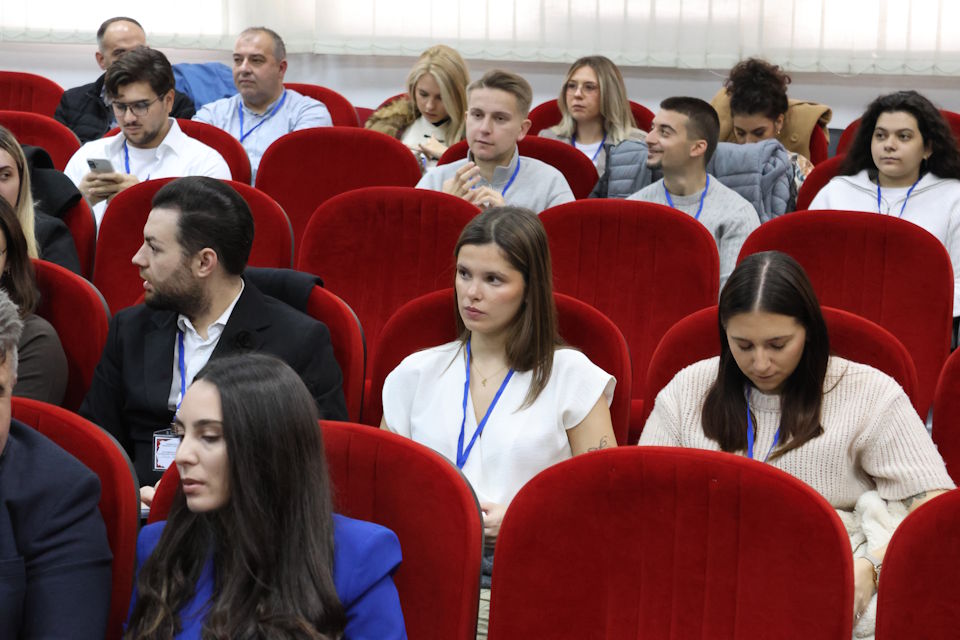
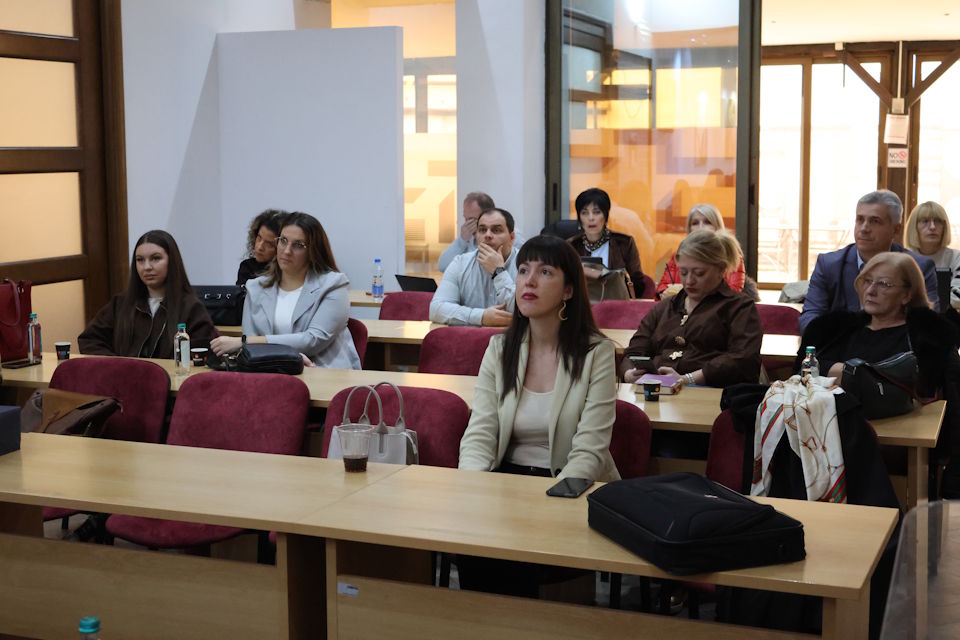
The final, twelfth session of the accredited programme “Governance and Oversight in the Security Sector” was held at the Training Centre of the Faculty of Law at Goce Delčev University in Štip, officially marking the completion of this successful two-month training cycle. The programme was implemented by the Centre for Lifelong Learning at UGD, in cooperation with the Geneva-based international organization DCAF.
On the occasion of the programme’s completion, Prof. Dr. Borka Tuševska emphasized the importance of this hybrid training concept, which combines theoretical knowledge with the extensive experience of experts working in the field.
“Today, we are at the Training Centre of the Faculty of Law, where the final session of the lecture series entitled ‘Governance and Oversight in the Security Sector’ is taking place. The programme is accredited within the Faculty of Law and delivered by the Centre for Lifelong Learning at Goce Delčev University in Štip. It is a hybrid programme delivered by professors, theoreticians and practitioners with many years of experience in training and oversight in the security sector,” emphasized Prof. Dr. Tuševska.
Over the past two months, a combination of online sessions and in-person lectures covered key topics in this field.
“We dedicated the final lectures to the concept and framework of classified information, oversight in the security sector, and human rights, thereby completing a total of 12 consecutive lectures. Experience has confirmed that the programme was well designed, enabling students, media representatives and the non-governmental sector to significantly enhance their knowledge and competencies,” she added.
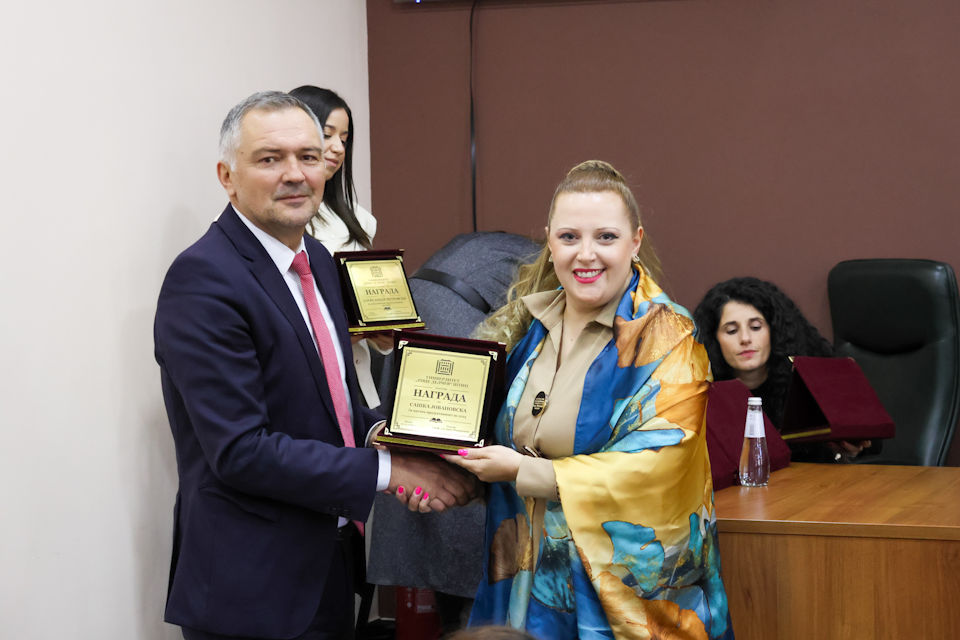
During the final session, participants were awarded certificates recognizing the competencies they had acquired, while the trainers received certificates of recognition for their outstanding contribution. Highlighting the importance of lifelong learning as a legally recognized concept that brings significant practical benefits, Prof. Dr. Tuševska announced that the University would continue to create opportunities for micro-credentials.
“We will continue our efforts, alongside regular academic curricula, to announce calls for participation in such micro-credential programmes, allowing everyone interested in a particular field to expand their knowledge through one-month or two-month courses, or shorter training programmes, depending on available capacities and the level of interest,” emphasized Prof. Dr. Borka Tuševska.