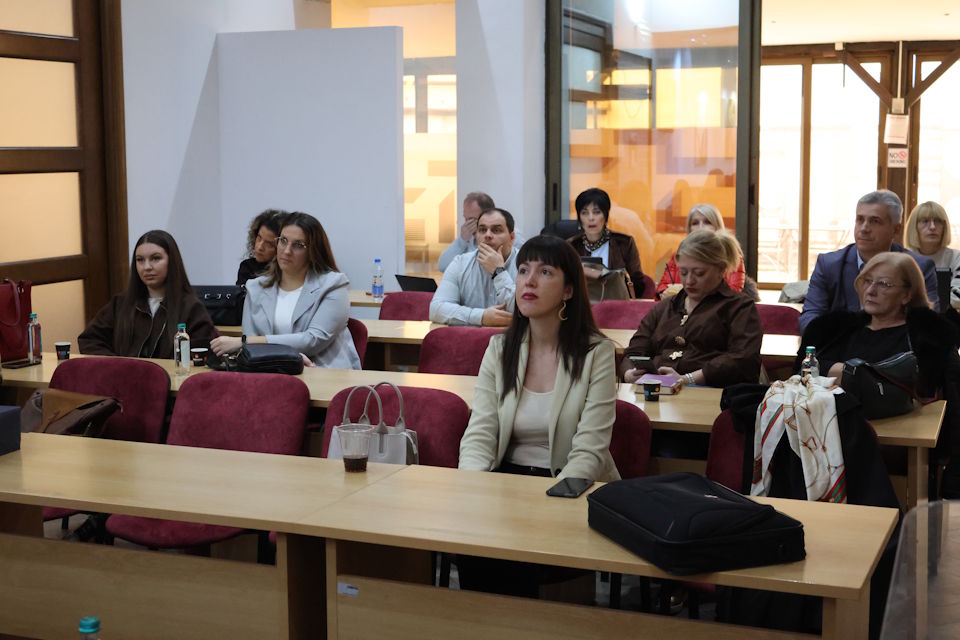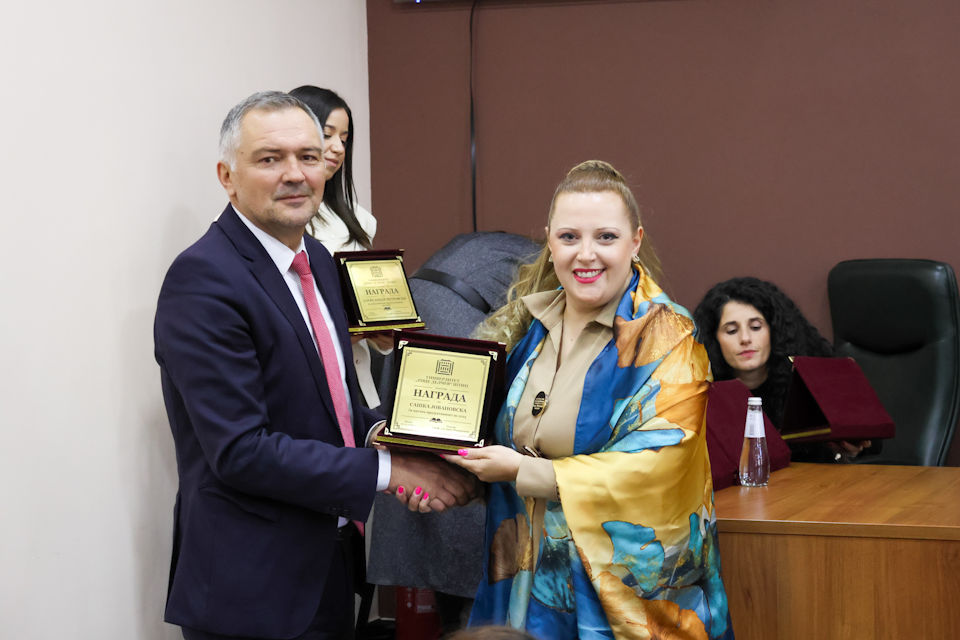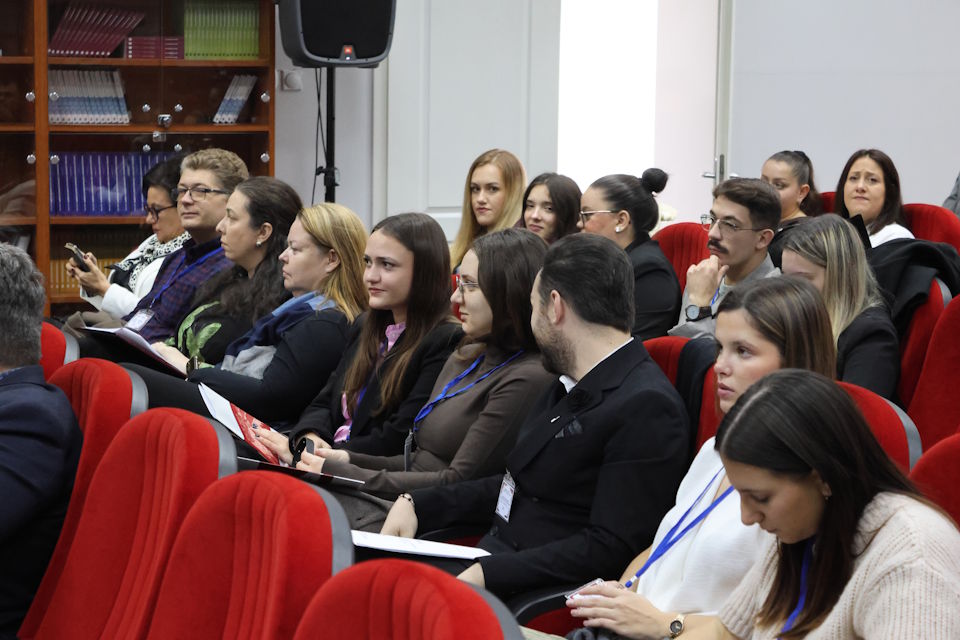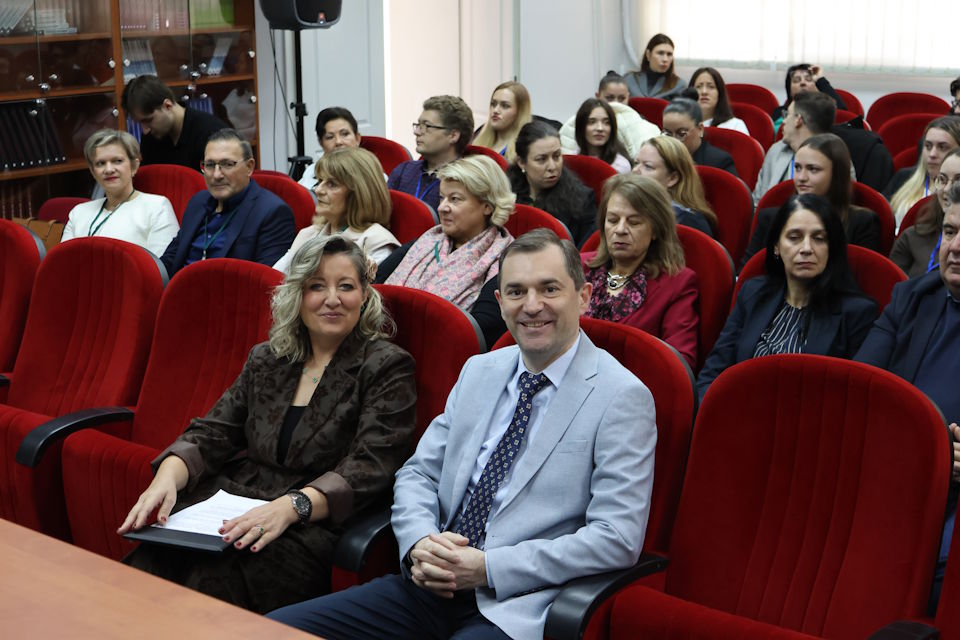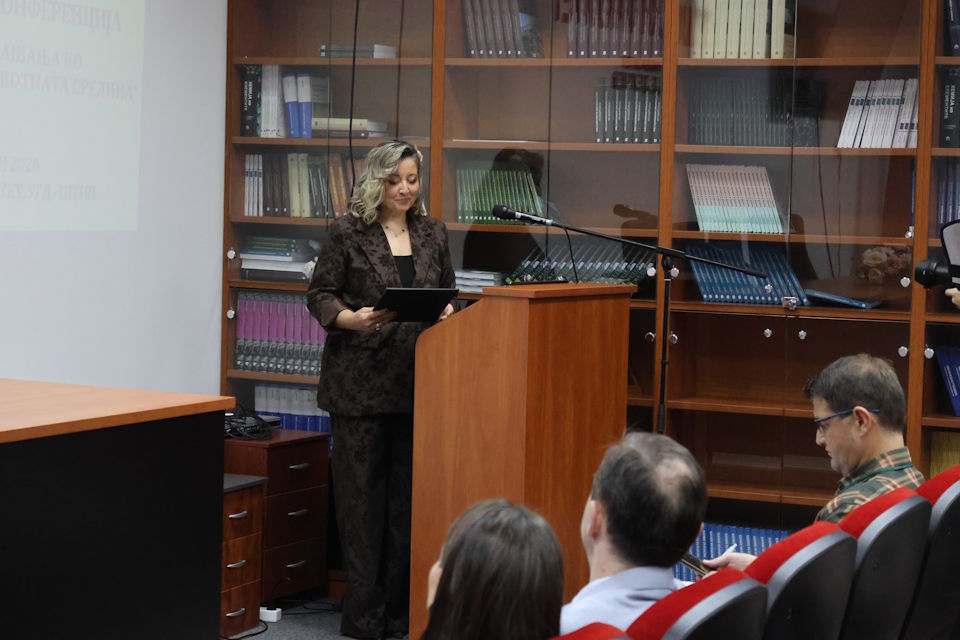
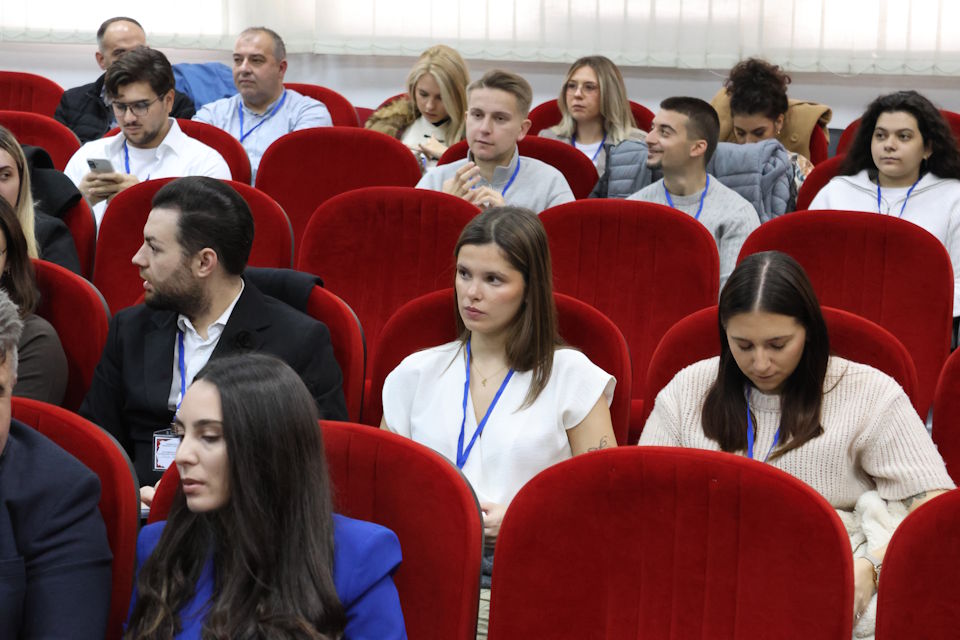
The Faculty of Agriculture at Goce Delcev University – Stip held its 7th Student Conference on the topic “Critical Issues in Agriculture and the Environment”, providing an opportunity to present and exchange scientific knowledge, research findings and ideas for addressing current challenges in agriculture and environmental protection.
The conference focused on issues related to sustainable agricultural production, food quality and safety, plant and environmental protection, as well as the application of digital tools to promote good agricultural practices. Students from the first, second and third cycles of studies had the opportunity to present the results of their research, conducted under the mentorship of university professors.
The Dean of the Faculty of Agriculture, Prof. Dr. Emilija Arsov, emphasized that the conference represents an important opportunity for students to present their research and contribute to initiating discussions on issues that are essential to the future of agriculture.
“We live in a time of challenges in which climate change is no longer a distant topic, but a reality affecting every aspect of agricultural production. Food production is one of the most dynamic fields, and today’s challenges are a reality that science and research must address,” Arsov pointed out.
She informed that this year, 19 undergraduate students and 16 students from the second and third cycles of studies registered to present their research. The topics addressed by the students include delayed sowing under drought conditions, the evaluation of different varieties and their potential to achieve higher yields, seed material control, as well as food quality and safety.
“The most important questions are what kind of food we consume and whether we have sufficient quantities of food to meet our needs. These are questions that cannot be answered by one person alone; they require an institutional approach, as well as scientific and laboratory research. We are particularly pleased that, through their presentations, students are offering solutions and proposals for improved and more sustainable agricultural production,” Dean Arsov emphasized.
The importance of such academic events was also highlighted by Nadica Bajraktarova, a third-cycle student at the Faculty of Agriculture, who noted that the conference enables students to present their knowledge and research and contribute to the development of science and their professional field.
According to her, food safety is an especially important topic because it directly affects human health, quality of life and consumer confidence. For this very reason, she stressed the need for continuous cooperation between the academic community and practical application as a prerequisite for developing high-quality solutions and further scientific advancement.
Alexandra Nedelk ovska-Kochovska, a first-cycle student, also spoke about the opportunities for academic and professional development through student research. She pointed out that the Student Conference is much more than an event where seminar papers and research papers are presented, as it provides an opportunity to acquire new knowledge and develop research and professional competencies.
This year’s research focuses on a comparative analysis of homemade yogurt prepared from locally produced milk, representing an example of how student research can be linked to food product quality and local production.
Prof. Dr. Dimitar Nakov, who mentors some of the papers presented at the conference, expressed his satisfaction with the cooperation with students from all three cycles of studies and with the realization of their research ideas.
“This demonstrates that students are at the centre of our attention. Working with them, supporting their progress and helping them acquire skills and competencies are particularly important in preparing them to become professionals who will successfully manage food production in practice,” Nakov emphasized.
The 7th Student Conference once again confirmed the role of the Faculty of Agriculture at Goce Delcev University as an academic environment that encourages research, knowledge exchange and student involvement in scientific processes. Through such activities, students are given the opportunity to turn their ideas into research and proposals that can contribute to more sustainable agriculture, higher-quality and safer food, and a more responsible approach to environmental protection.