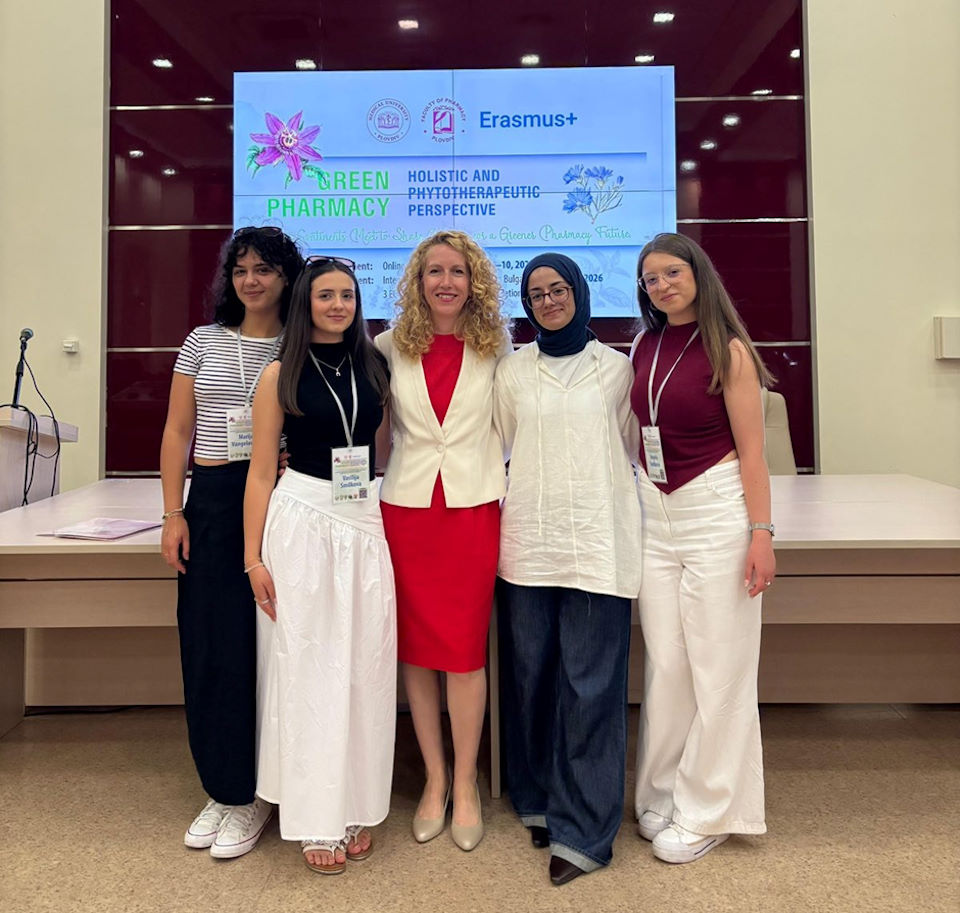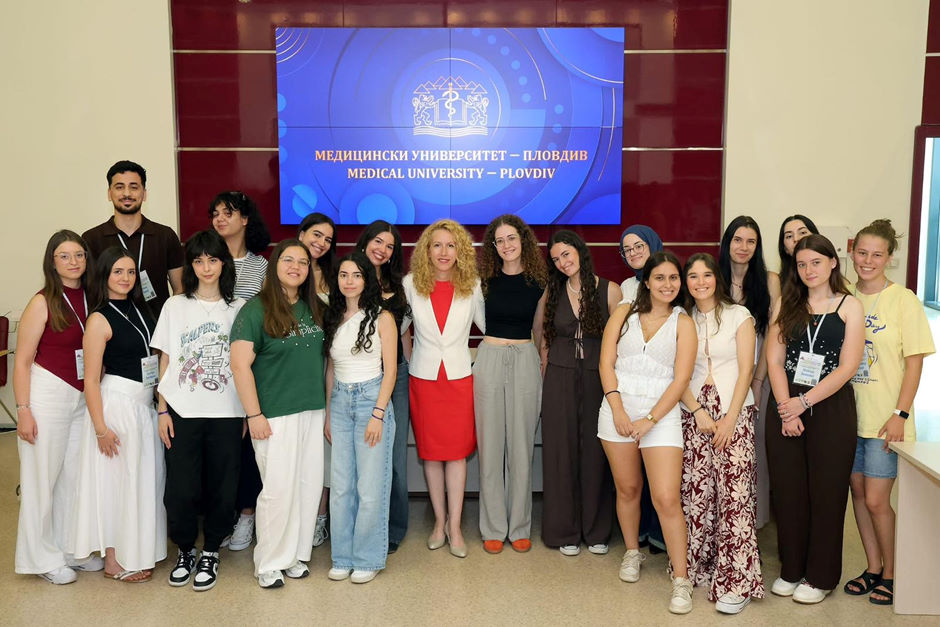
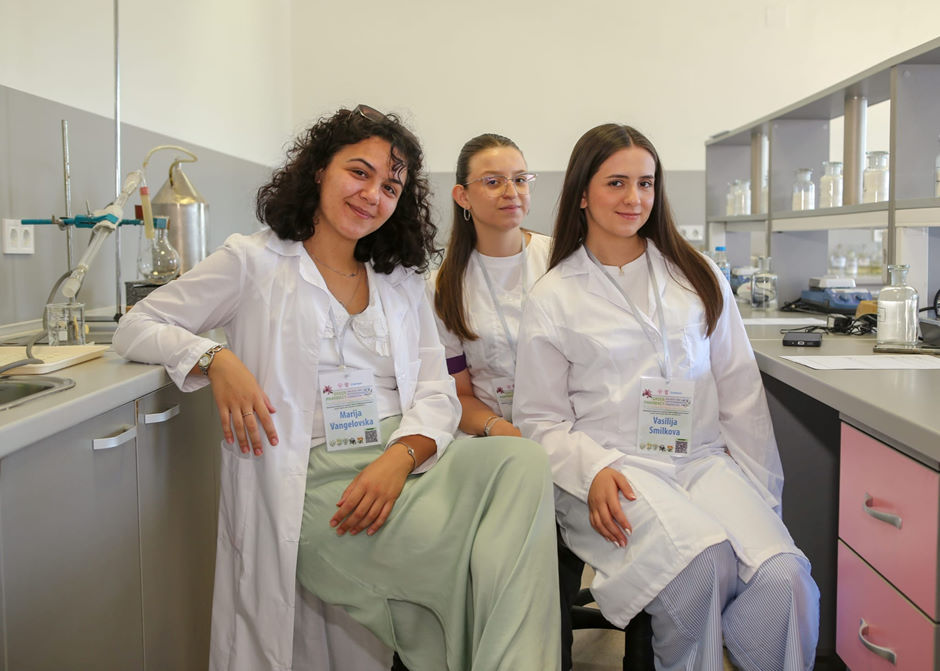
Marija Vangelovska, Angela Smilkovska and Vasilija Smilkovska, Pharmacy students at the Faculty of Medical Sciences of the University of Gdansk, were part of the Erasmus+ Blended Intensive Programme “Green Pharmacy – A Holistic and Phytotherapeutic Perspective”, implemented in cooperation with the Medical University of Plovdiv, Bulgaria.
The programme took place from 6 to 17 July 2026 and combined online lectures with practical mobility in Plovdiv from 13 to 17 July. Through lectures, laboratory work and practical activities, the students had the opportunity to deepen their knowledge in the field of phytotherapy, pharmacognosy and the holistic approach to pharmacy.
“During the practical part, we worked with various plant extracts and herbal preparations, and practically made tablets of plant origin using a tablet machine. We learned about the application of HPLC and GC in the analysis of plant compounds, and we worked with these methods practically throughout the program,” shares Marija.
The practical activities allowed the students to follow the process from medicinal plants and plant material to the preparation and analysis of various pharmaceutical preparations.
“One of the activities was the preparation of various herbal preparations – infusions, decoctions, aromatic waters, tinctures and extracts. Through the practical work, we better connected the knowledge about medicinal plants with their real application in pharmacy,” says Angela.
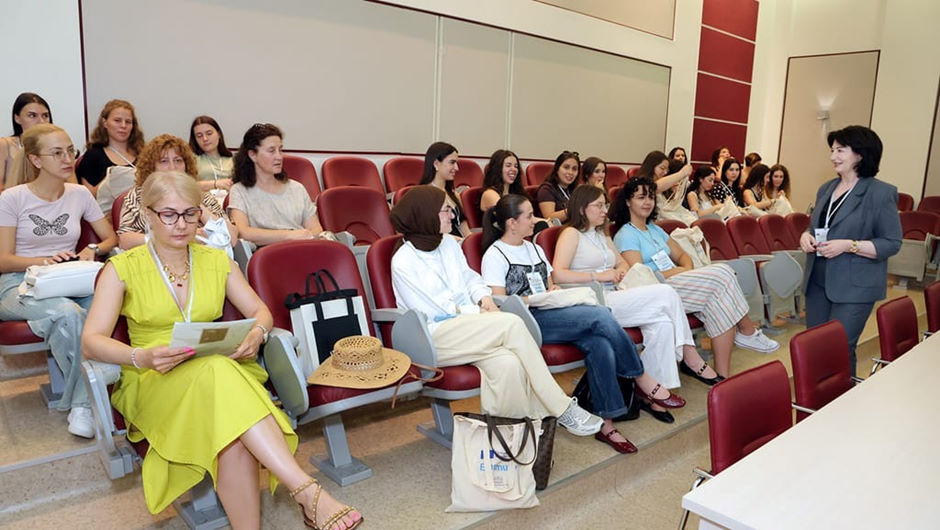
The theoretical part of the program covered topics related to the use of medicinal plants and herbal products in healthcare. The students attended lectures on herbal medicines and their application, as well as interactive sessions on essential oils and possible interactions between herbal preparations and medicines.
“During the program, we attended a series of lectures and workshops in the field of phytotherapy, pharmacognosy and holistic pharmacy. This allowed us to see the application of phytotherapy from multiple aspects and to build on the knowledge we acquire during our studies,” emphasizes Vasilija.
A special experience for the students was also the visit to the Simulation Center in Plovdiv, where they had the opportunity to see how modern simulation methods are applied in practical teaching of pharmacology and toxicology.
They performed some of the simulations themselves, working with scenarios that allowed them to connect theoretical knowledge with situations close to real healthcare practice.
For the students, participation in the program was an opportunity to acquire new academic and practical knowledge, get acquainted with a different approach to pharmaceutical education and work in an international academic environment.
Experience shows how mobilities within the framework of Erasmus+ can complement the education acquired at the UGD with practical work, new methods and knowledge that students can apply in their further academic and professional development.