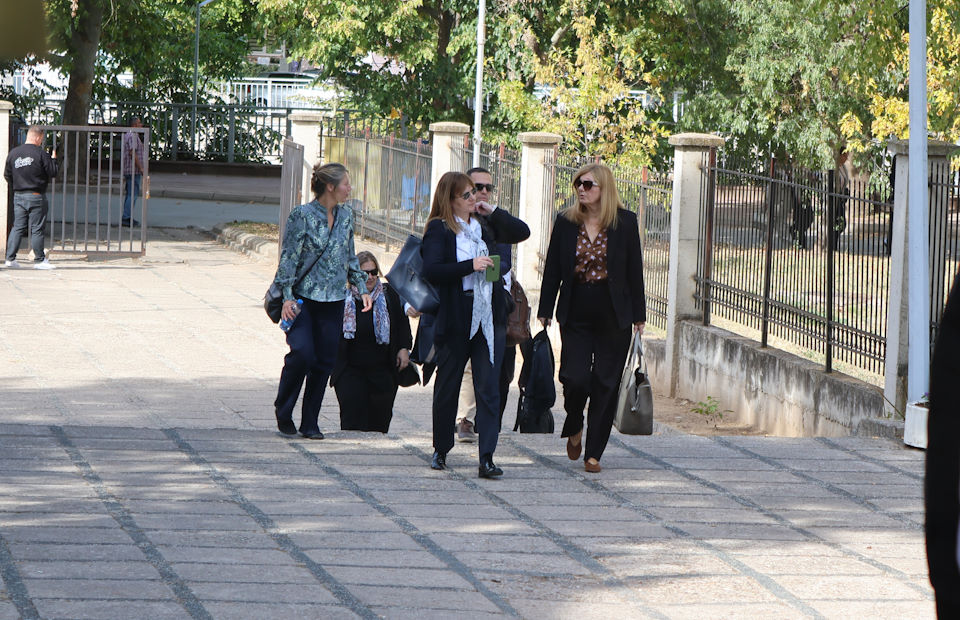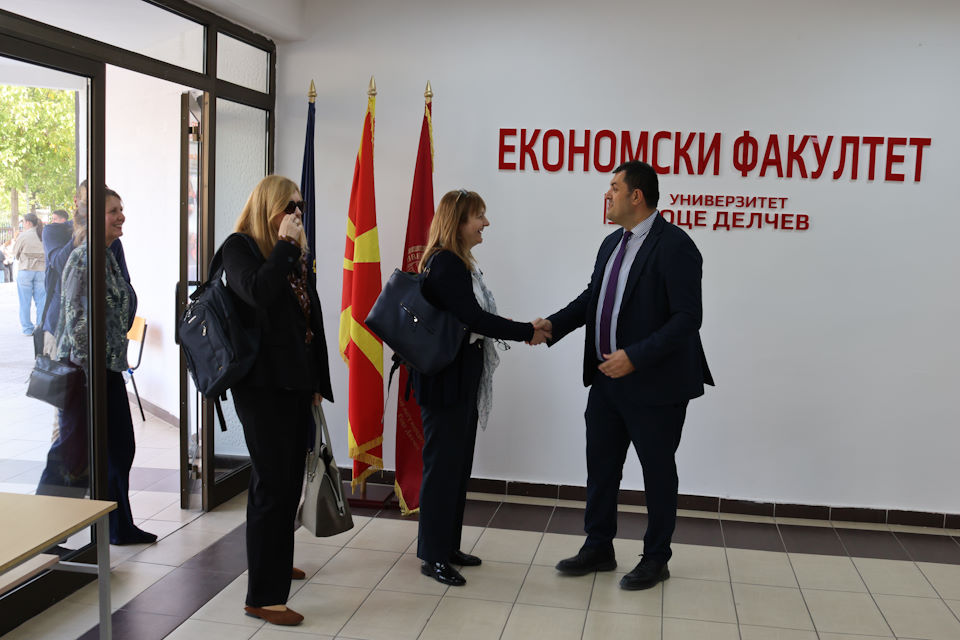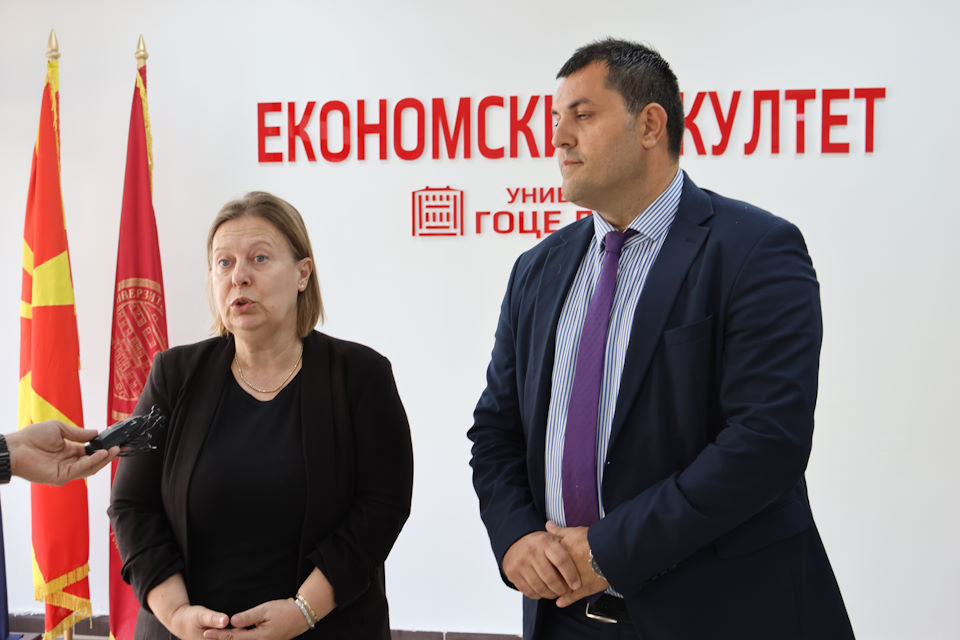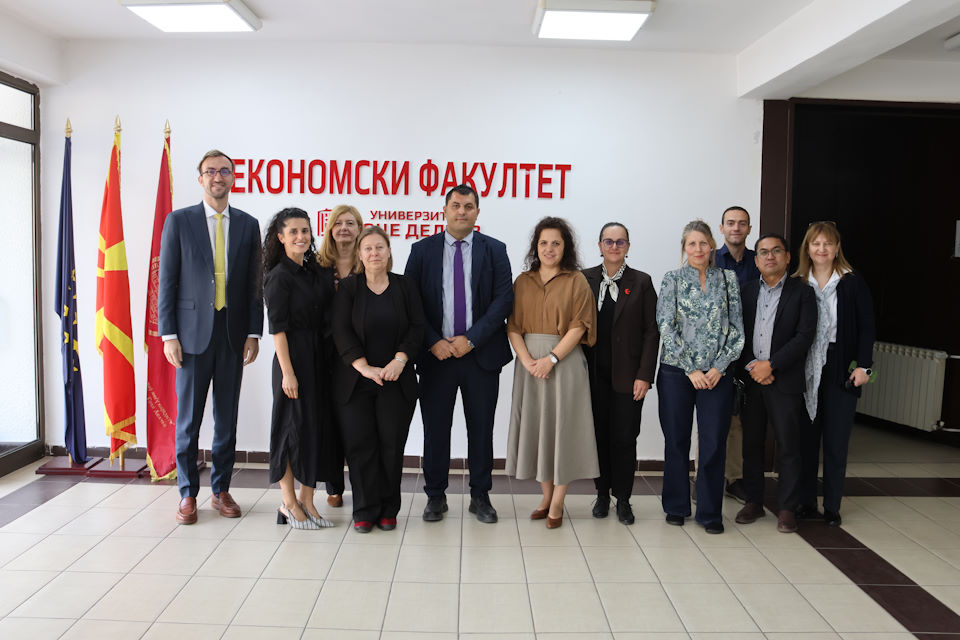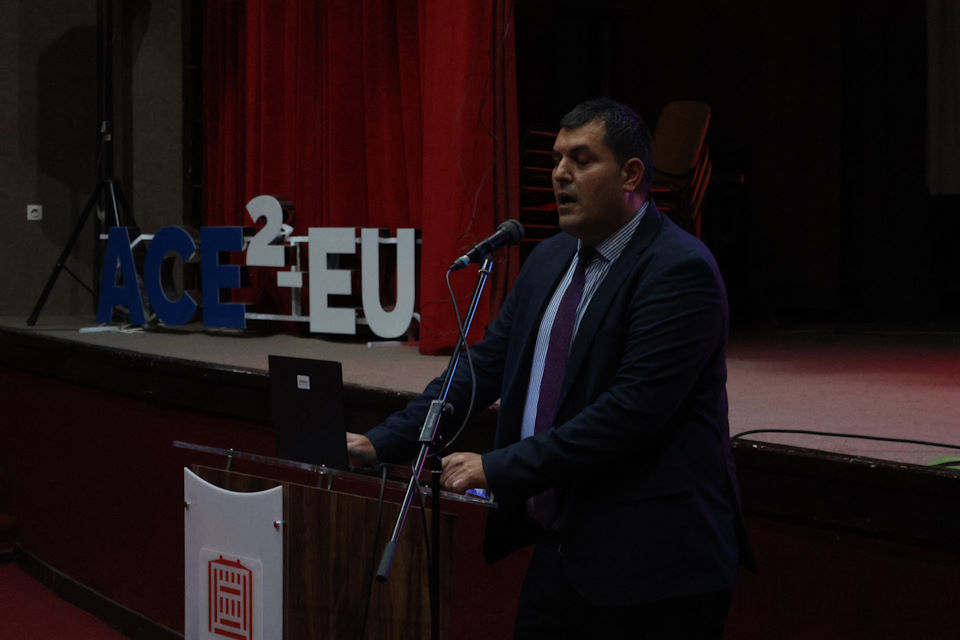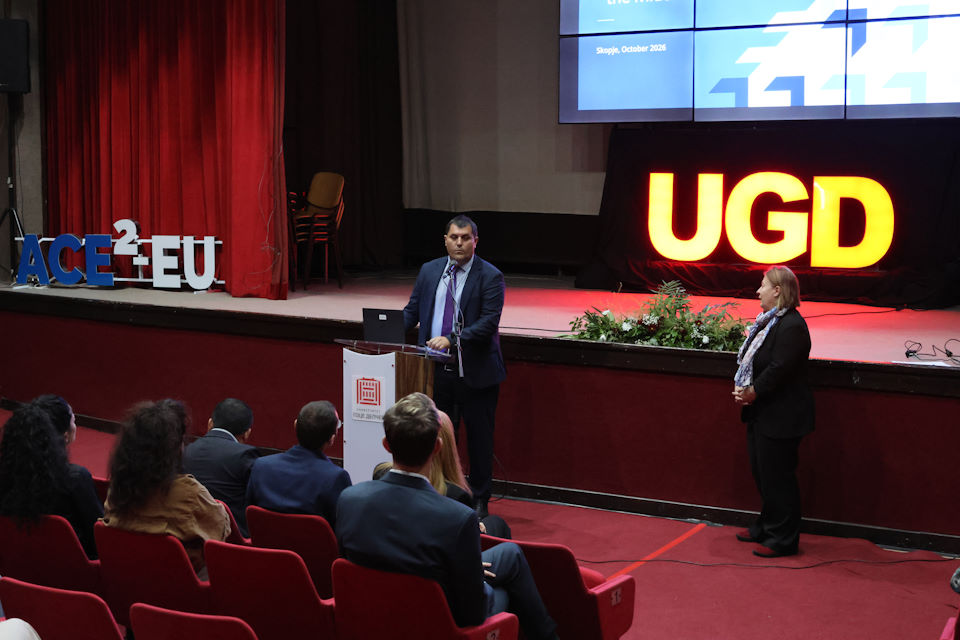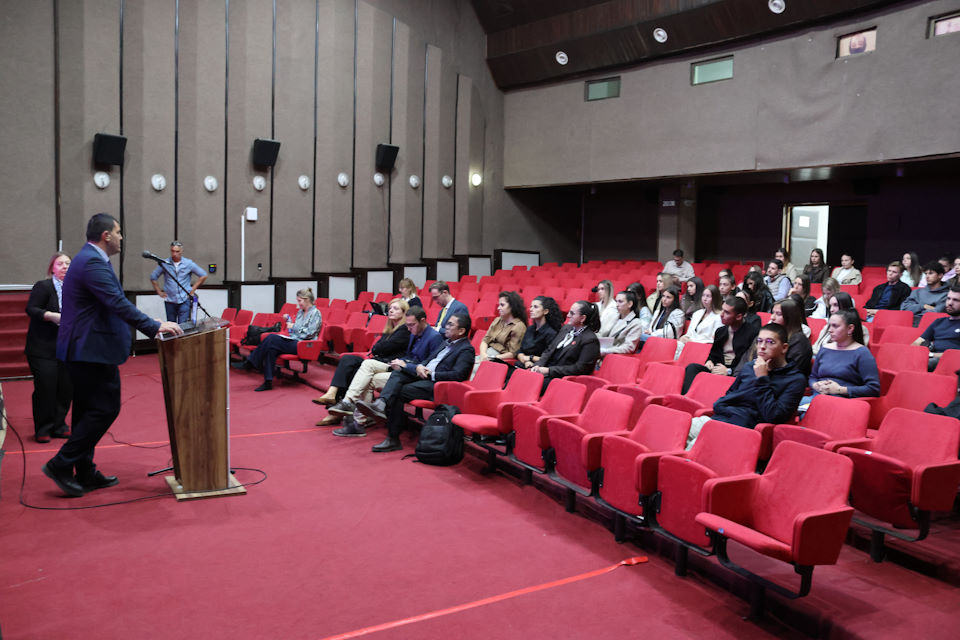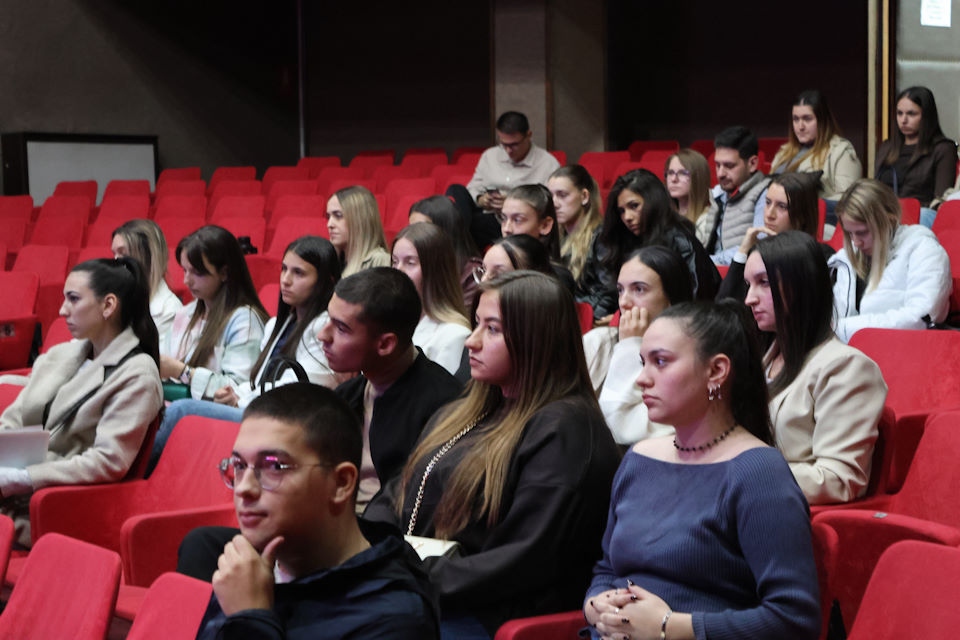
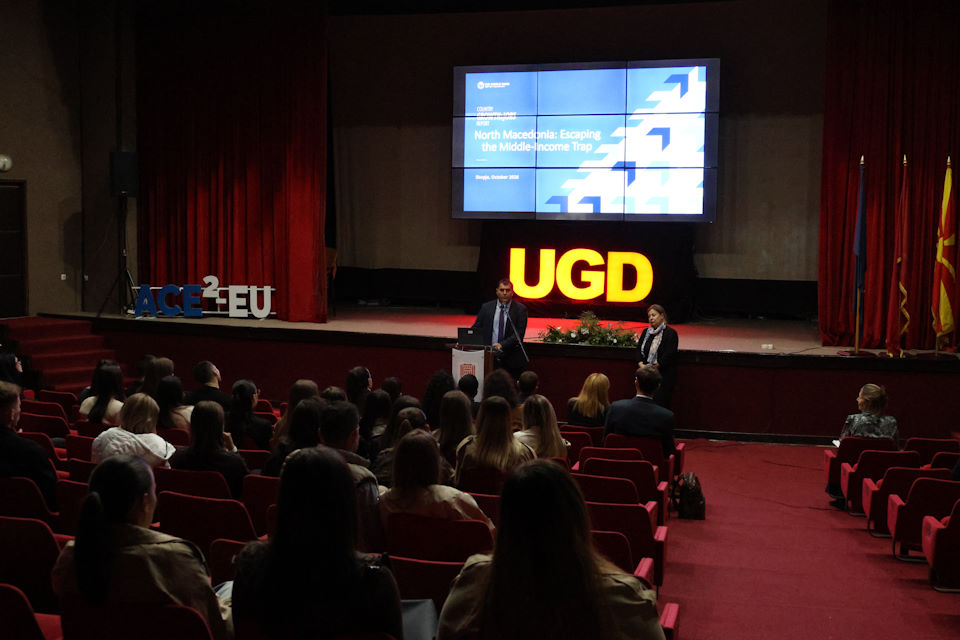
The Faculty of Economics at Goce Delcev University today hosted senior representatives from the World Bank, who presented the latest report on economic growth and the labor market, entitled “North Macedonia: Exiting the Middle Income Trap”, to students, professors and researchers.
The event was an opportunity for the academic community to directly familiarize themselves with key economic analyses, structural challenges and recommendations for the future sustainable development of the domestic economy.
The Vice-Rector for Development, Investment and Maintenance at the Faculty of Economics, Prof. Dr. Darko Lazarov, emphasized that organizing such events in cooperation with international institutions is of essential importance for the acquisition of practical and applicable knowledge by students, as well as for the validation of the scientific research of the teaching staff.
“What is important for us as a faculty and university is that through this type of event, especially with our partners such as the World Bank, we show that we are strongly connected to all relevant stakeholders in society. This is of direct benefit to our students — in addition to theoretical knowledge, to hear analyses that are important for the country in terms of opportunities for future development, employment and opening new businesses. At the same time, we also enable our professors to connect with these institutions and validate their scientific results in the field of economics,” emphasized Prof. Dr. Lazarov.
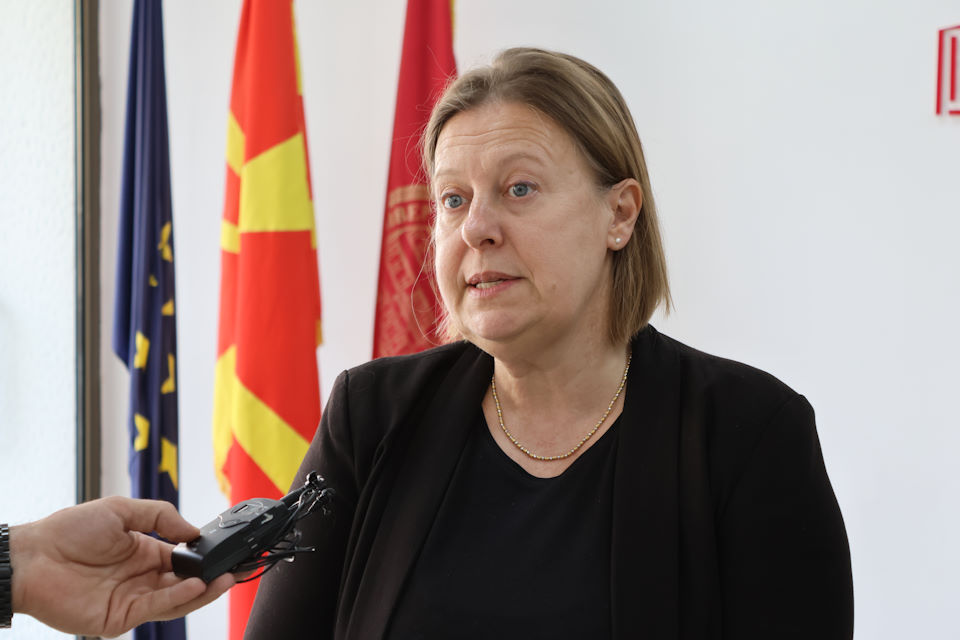
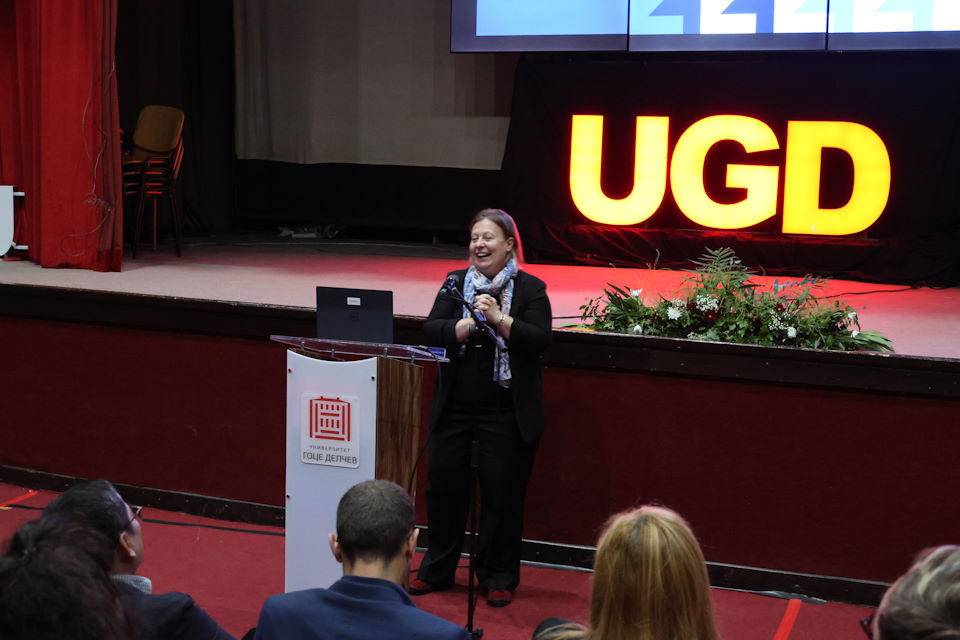
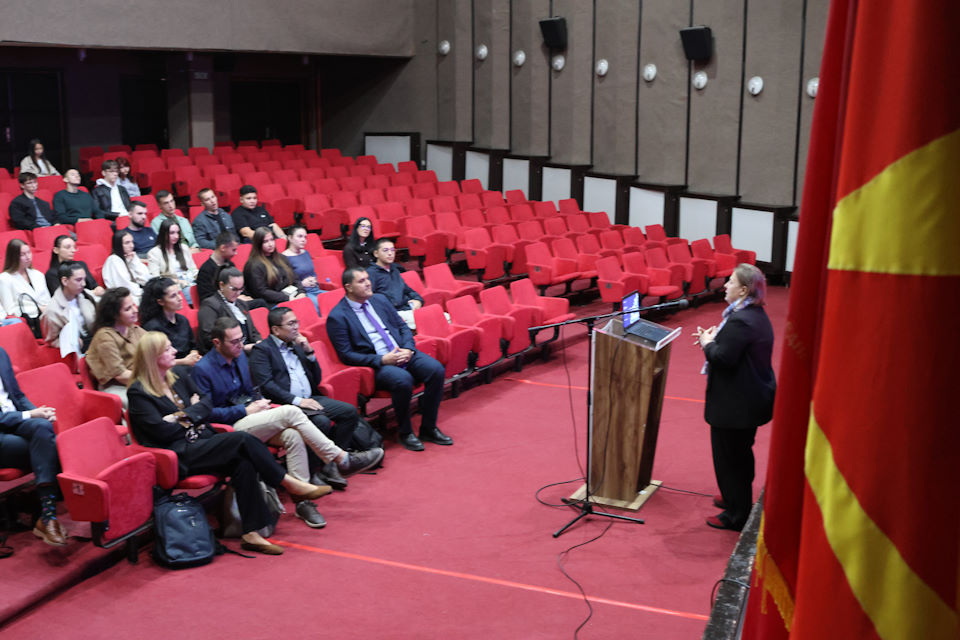
Sanja Madžarević-Schujster, Senior Economist at the World Bank, explained during her address that the report offers a detailed analytical framework on how to accelerate economic growth and create better-quality and better-paid jobs. According to the analyses, if the proposed reform agenda is implemented, the country can achieve a significant leap in economic progress and convergence towards European living standards.
“The report compares Macedonia with other countries, detects the structural weaknesses of the economy and defines steps for its acceleration. It is particularly significant that the reform agenda proposed by the study shows that the average economic growth could accelerate from 2.4% to 3.8% by 2050. This would bring the country to around 75% of the EU-27 average in terms of income level and convergence to the European Union standard in the next two decades,” emphasized Madžarević-Schujster.
With this event, the Faculty of Economics and the University “Goce Delcev” once again confirmed their openness to global institutions and their commitment to creating a modern educational process aligned with real economic trends.