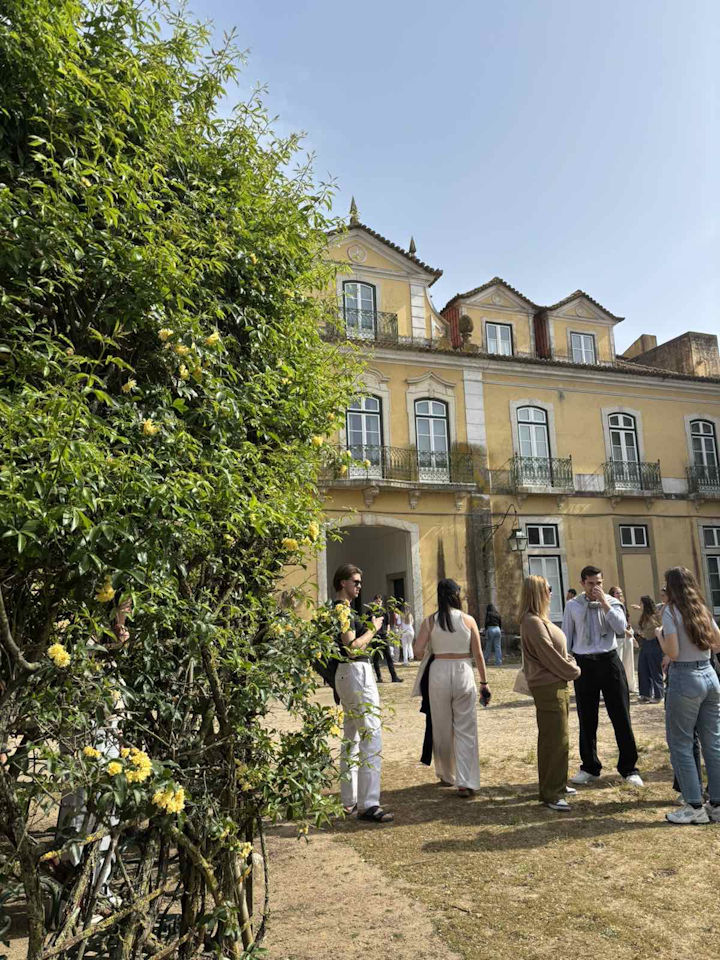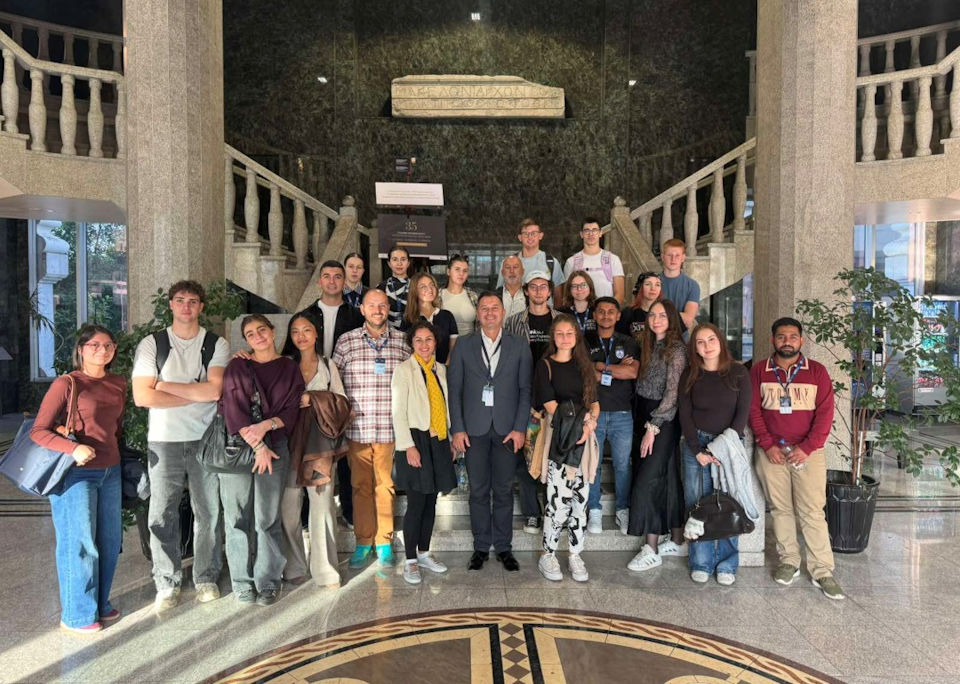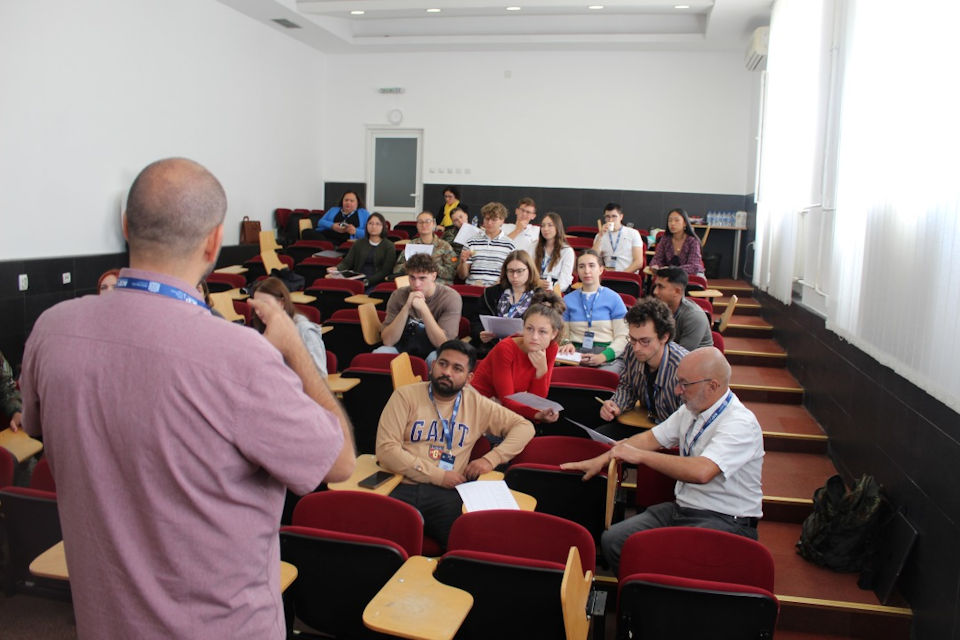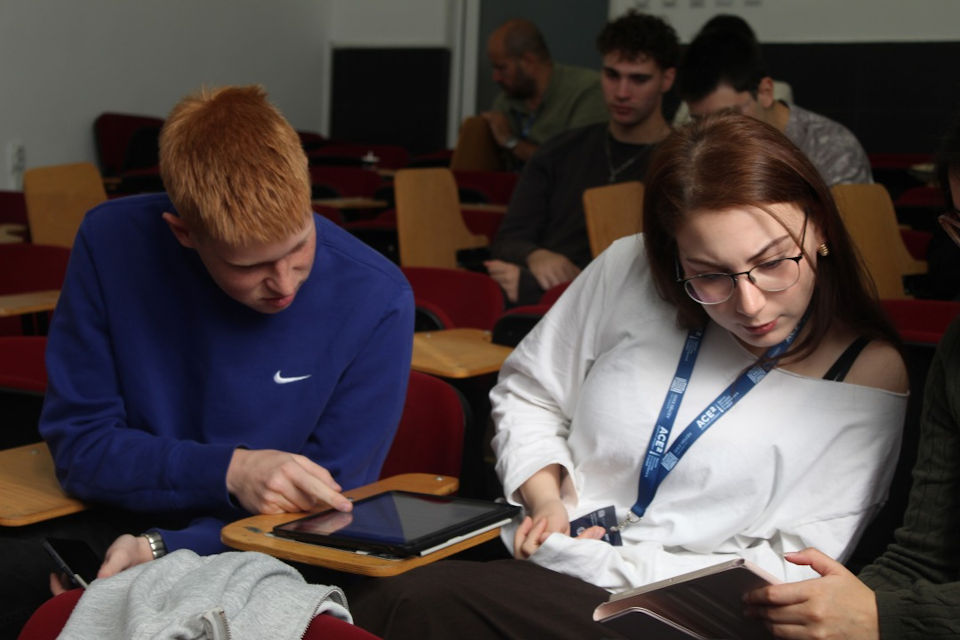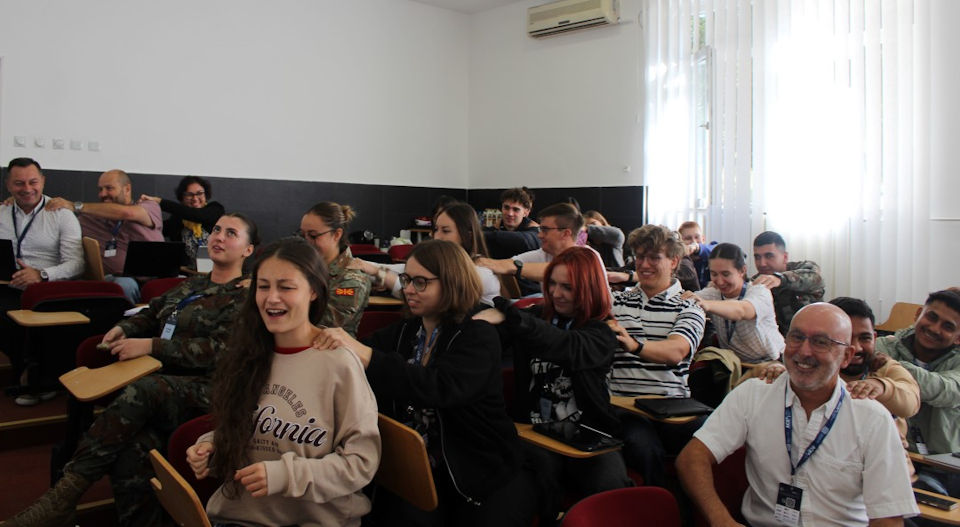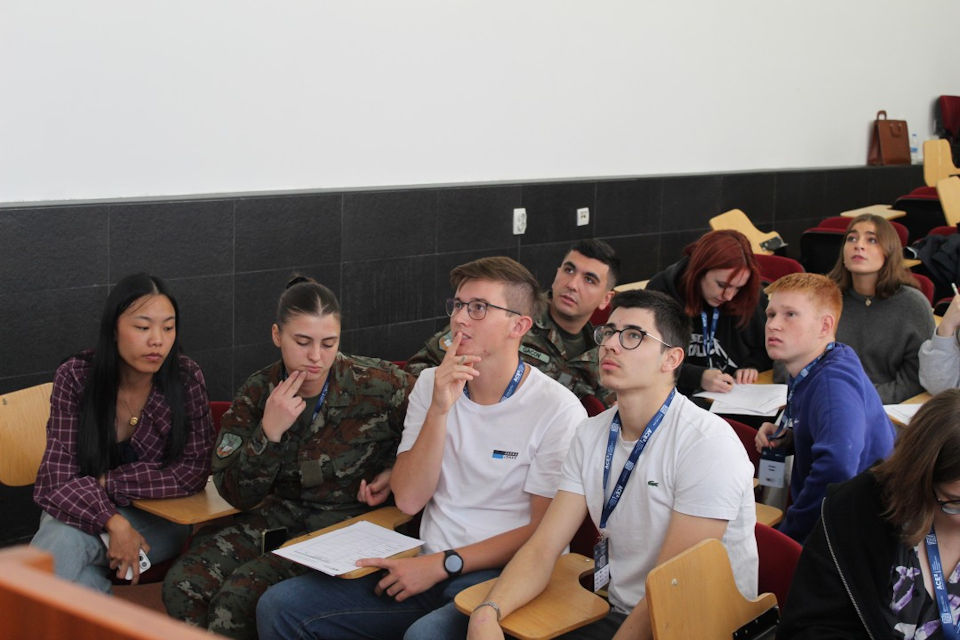
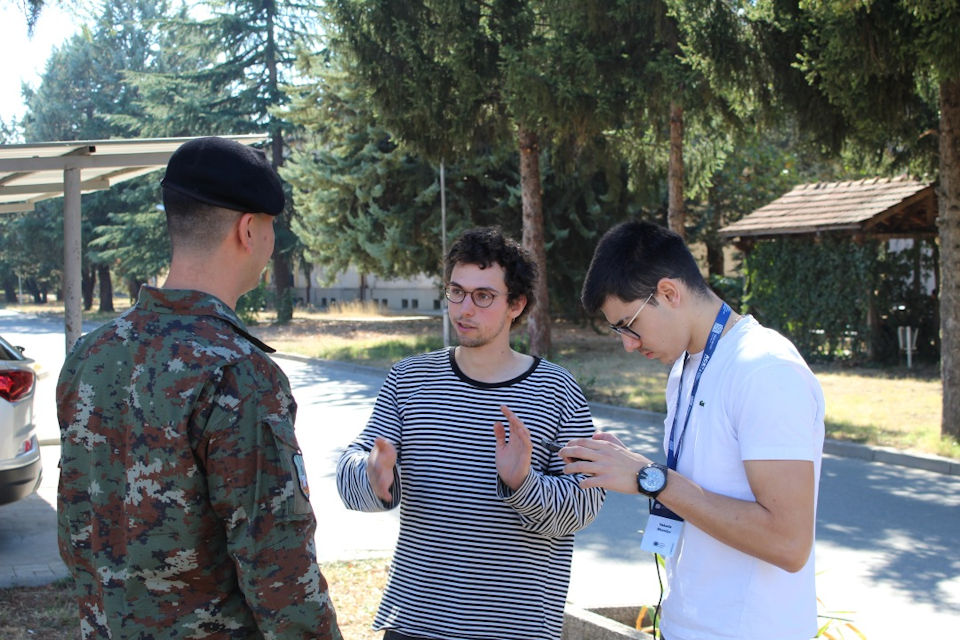
Students from nine European universities gathered in Skopje to learn how to respond to complex security threats, cyberattacks and natural disasters through theory, simulations and field exercises.
Organized by Goce Delcev University – Stip and the “General Mihailo Apostolski” Military Academy, the practical component of the Applied Blended Challenge (ABC) programme, dedicated to Civilian Contingency Planning, was recently held in Skopje. The initiative is part of the activities of the European Alliance ACE2EU and provides intensive training aimed at addressing contemporary security and civil protection challenges.
The programme, which carries 3 ECTS credits, began with an online preparatory phase in September and culminated in a week of interactive workshops, simulations and field visits in Skopje. It brings together academics, experts and students from North Macedonia, Spain and Austria.
The programme was officially opened with speeches by professors who highlighted the main objectives of this international collaboration.
“Together with Carinthia University of Applied Sciences and Francisco de Vitoria University, we are delivering a specialised programme on civilian contingency planning at the premises of the Military Academy within Goce Delcev University. This is one of the learning opportunities offered by the Alliance. Students have the opportunity to master both the theoretical and practical aspects, take part in exercises and work individually with professors. It is an interdisciplinary and multicultural programme that fosters team spirit. In addition to the theoretical component, students will establish contacts with several institutions in the defence sector and participate in practical field exercises,” said Prof. Dr Borka Tushevska of UGD.
One of the key aspects of the programme is the integration of different academic disciplines and professions in order to develop coordinated response plans.
“The essence of this course is to enable students to learn how to manage emergencies through a holistic approach. This means that young people have the opportunity to collaborate with peers from entirely different fields — engineers, lawyers, artists and economics students — working side by side,” said Prof. Dr Eduardo Lapo of Francisco de Vitoria University in Spain.
In today’s world, security challenges rarely occur in isolation. Through simulation exercises, students assumed roles requiring them to respond rapidly to multiple, interconnected threats.
“We live in an exceptionally challenging environment, particularly in terms of security. That is why this activity focuses directly on response and planning related to security risks. We are working on civilian contingency planning with students from nine different universities across Europe. The challenges vary in nature: we are examining scenarios involving blackouts (a complete interruption of the electricity supply), cybersecurity issues and flood threats. The aim is for students to identify an appropriate response, because in reality, a threat never occurs on its own but is accompanied by a series of other complications,” said Prof. Dr Jugoslav Ackoski of the Military Academy at UGD.
Participants highlighted the importance of acquiring practical crisis management skills that they can apply in their future careers and home countries.
“I am part of the ACE programme and am participating in the civilian contingency planning programme. I am genuinely curious to learn how crises are managed from both civilian and military perspectives. I expect us to gain practical knowledge that will be of great benefit to us,” said Florian Wall, a student at Carinthia University of Applied Sciences in Austria.
Tobias Seber, a student at the University of Ingolstadt in Germany, added:
“Alongside my studies, I work for German Railways, where I am involved in the Project Management and Infrastructure Planning Department for freight transport. This project and the experience I am gaining here are helping me better understand planning and organisational processes in complex environments.”
Through this programme, Goce Delcev University once again reaffirms its commitment to internationalisation, strengthening crisis management capacities and building communities that are resilient to contemporary risks.