Lectures by renowned professors at UGD
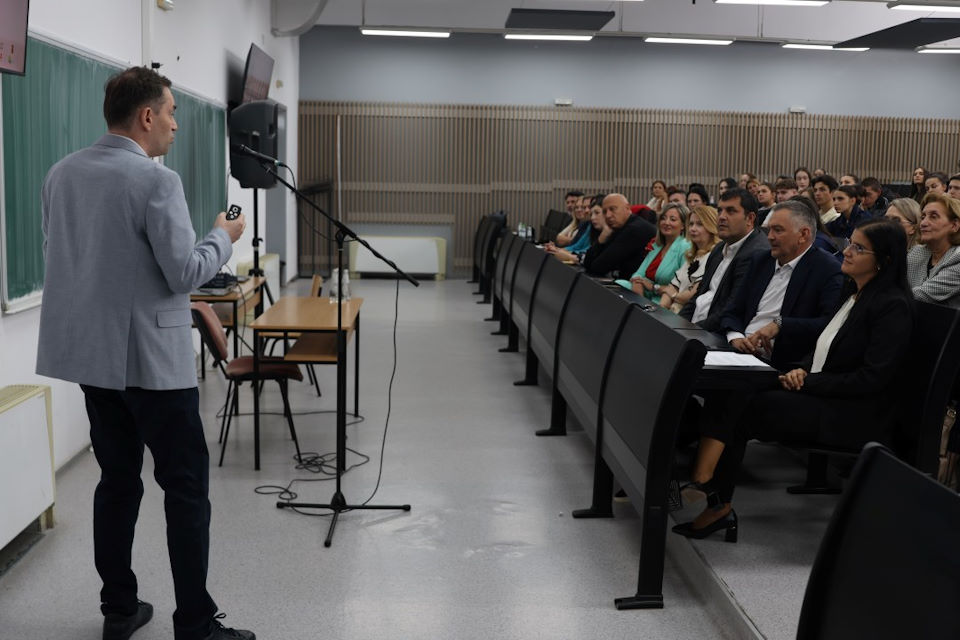
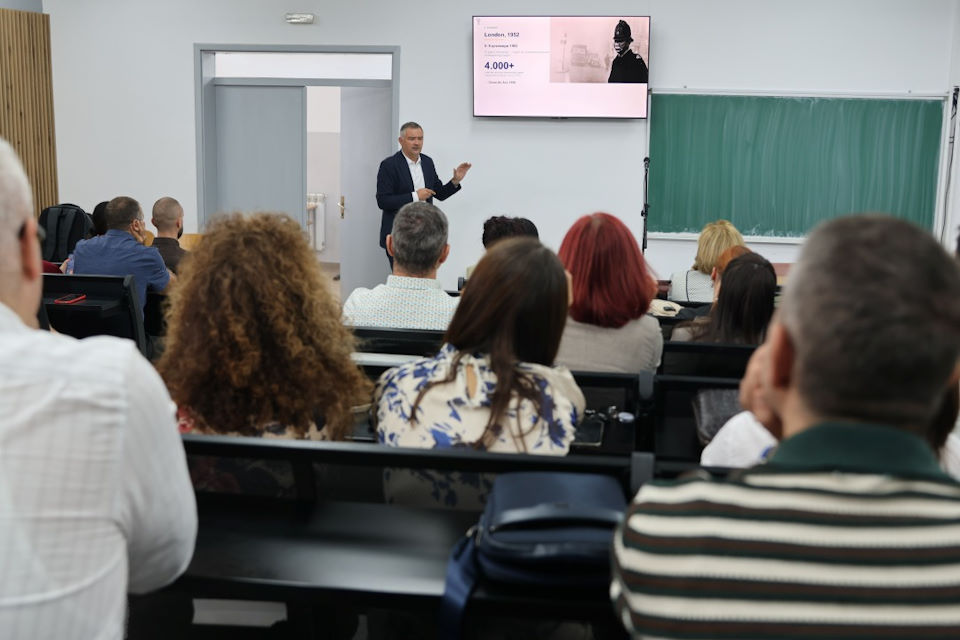
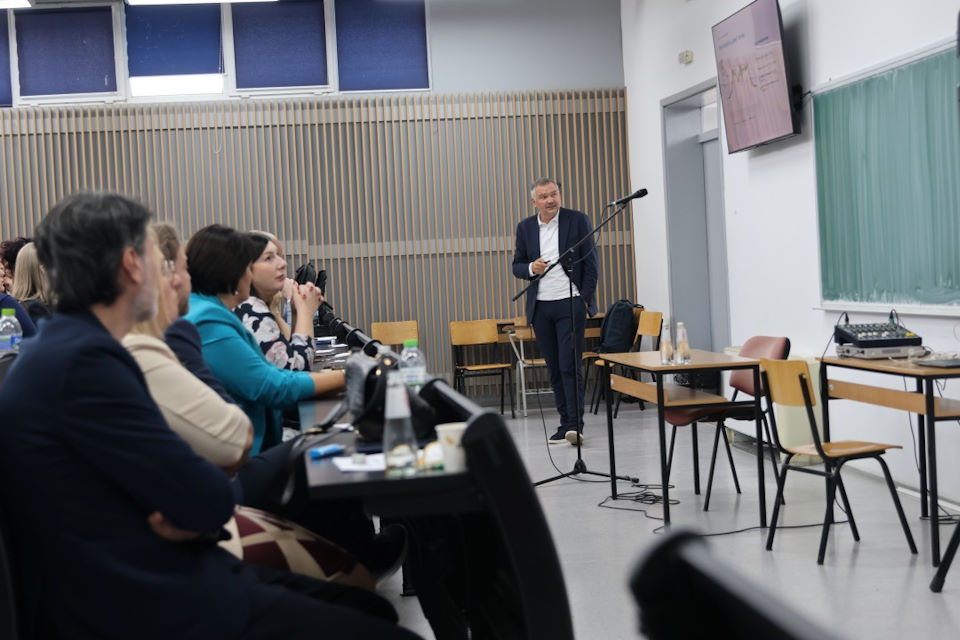
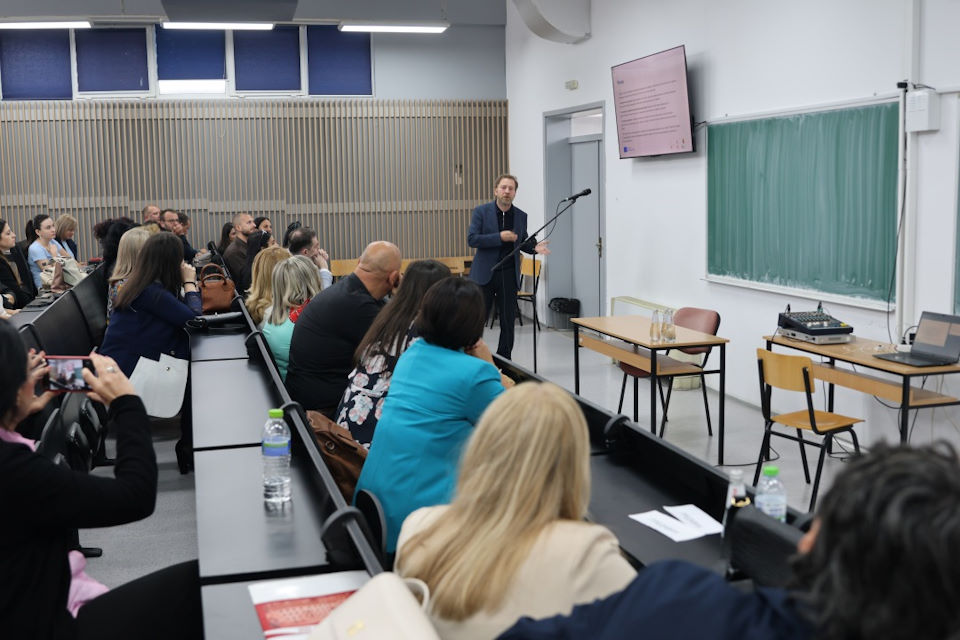
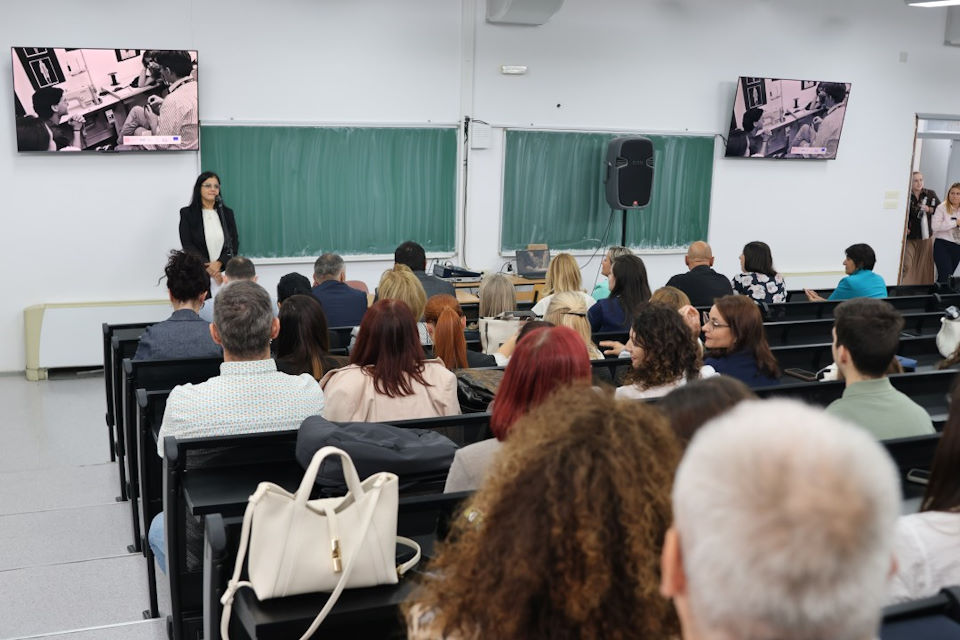
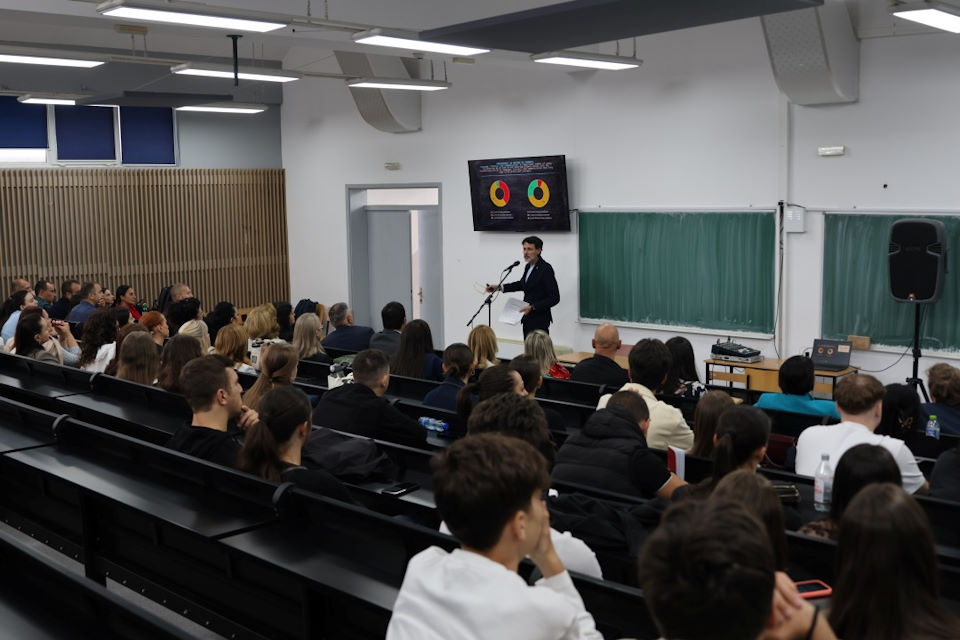
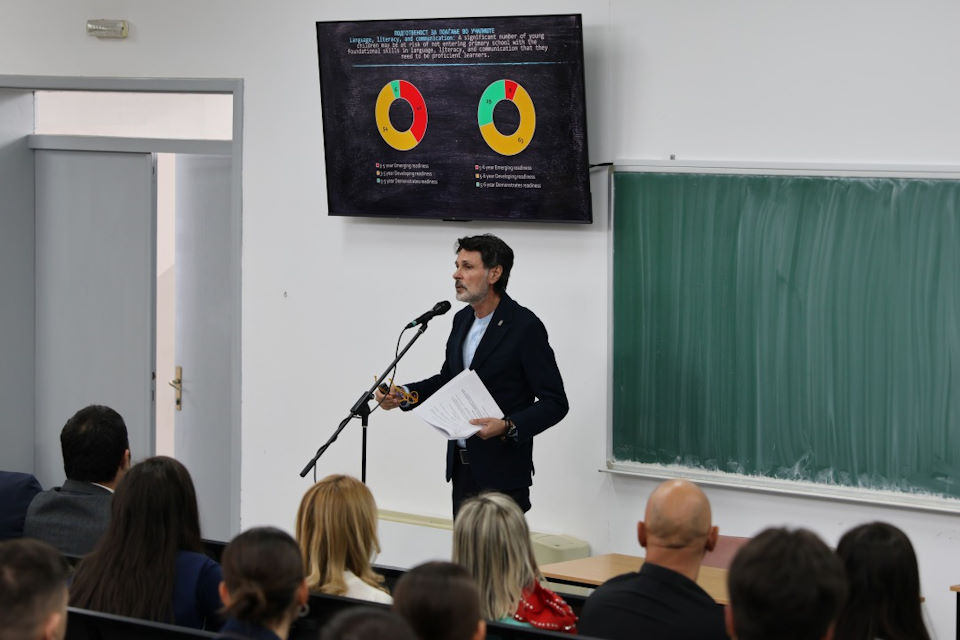
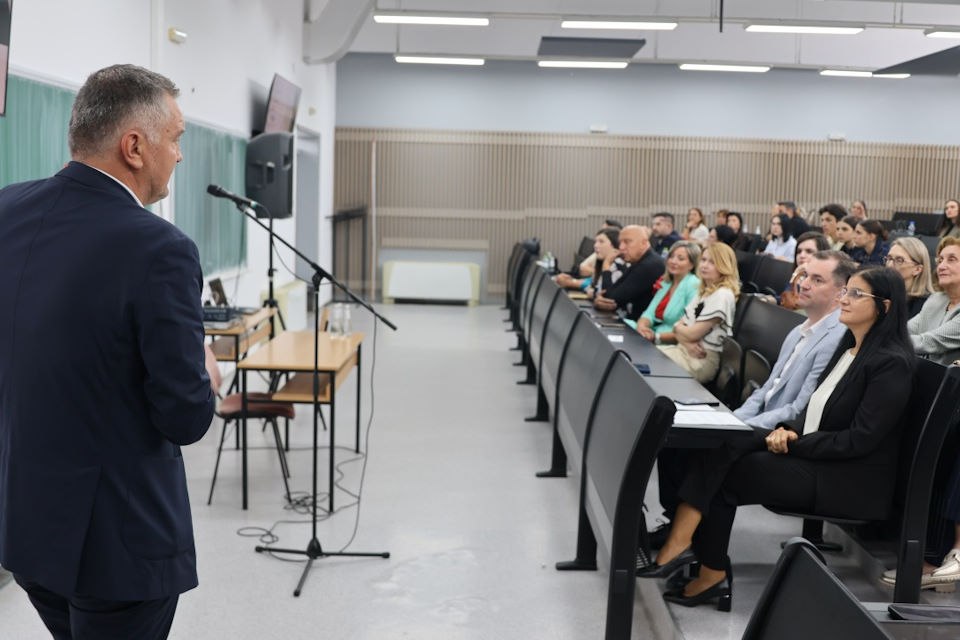
Within the framework of the European Researchers’ Night, on 25.9.2026 (Friday), a series of five lectures by renowned professors was held at the “Goce Delcev” University in Stip, on topics of interest to the general public.
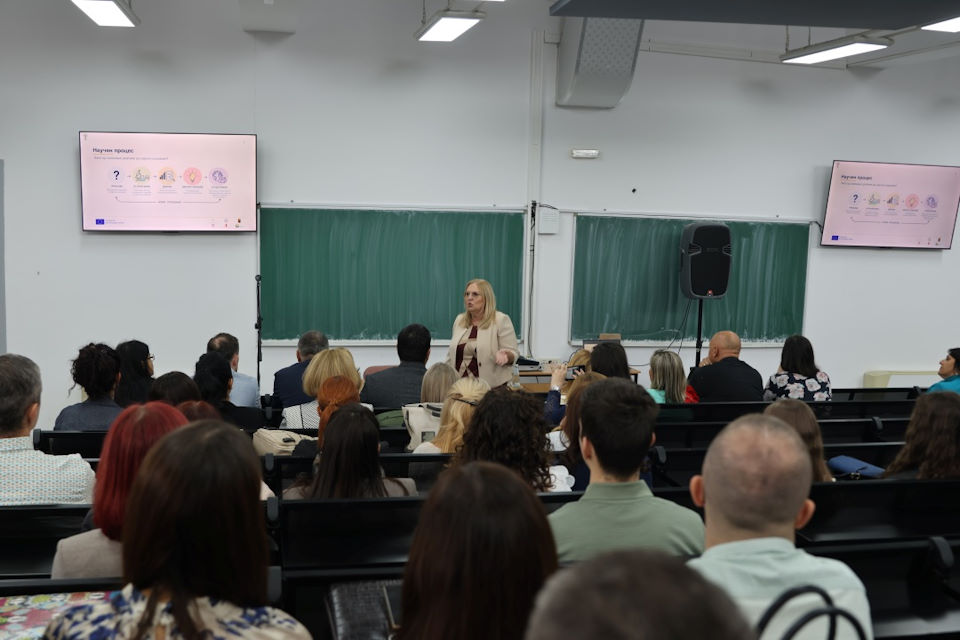
The first lecture on the topic “Science and Us” was given by Prof. Dr. Zdenka Stojanovska, full professor at the Faculty of Medical Sciences, Doctor of Physical Sciences. Her lecture was, in fact, more the result of her several years of work as Vice-Rector for Science at the UGD. The professor spoke about the concept of open science, how scientific knowledge is becoming more accessible today, but also how often the phrase “scientifically proven” is misused in texts on social networks and the media. Her message was “When we read “scientifically proven”, it should not be the end of the verification – but the beginning”.
Prof. Dr. Kiril Barbareev, a full professor at the Faculty of Educational Sciences at the University “Goce Delcev” in Stip, who researches and teaches in the areas of methodology and teacher education, held the second lecture on the topic “Pedagogy of Success: How do we learn to be (un)successful?”. Science has long confirmed that our habits, behaviors and life patterns are deeply shaped by the environment in which we grow up. Prof. Barbareev’s presentation started from the paradox that success and failure are not only the result of individual talent, but are deeply conditioned by the system in which we function. The focus was on the critical analysis of educational systems, which, operating according to an extractive model based on bureaucracy and fear, exhaust the energy of young people and teachers, limiting their potential. Furthermore, the professor emphasized the need for a necessary pedagogical and cultural transformation, which should restore the human aspect and empathy to the heart of the educational process.
By examining the microenvironment – the space where young people and their teachers meet daily – it was emphasized that true learning only happens in inclusive ecosystems built on trust, dialogue, and freedom.
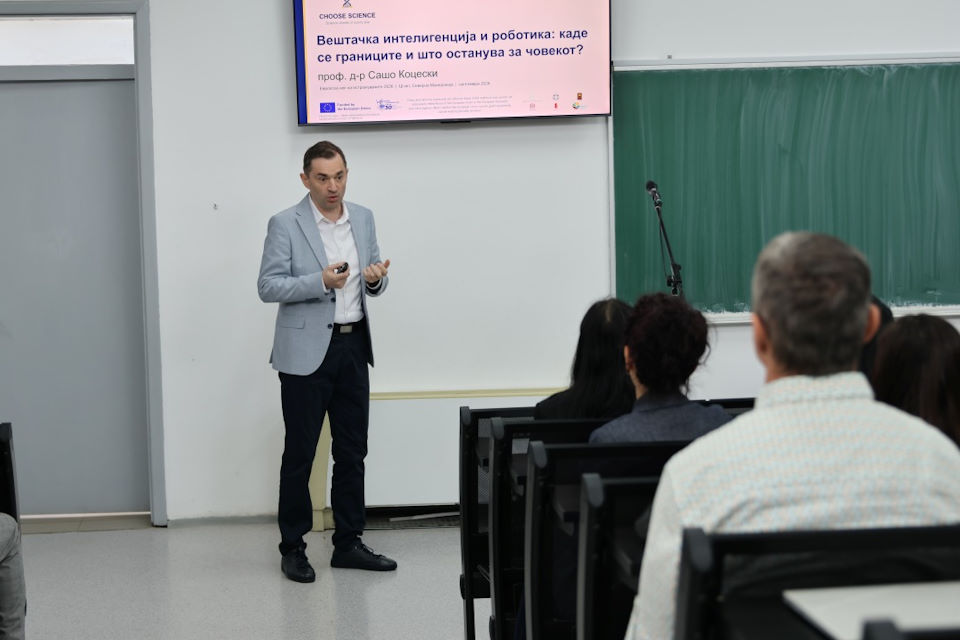
The third lecture on the topic “Artificial Intelligence and Robotics – Where are the limits and what is left for humans?” was given by Prof. Dr. Sasho Koceski, a full professor at the Faculty of Informatics at the University of Belgrade and a Doctor of Technical Sciences, who researches in the field of robotics, artificial intelligence and medical informatics. The professor is the current Vice-Rector for Education at the University of Belgrade. Prof. Koceski’s lecture, inspired by a question from his daughter, aimed to explain why artificial intelligence today finds it easy to solve an Olympic geometry problem, but a simple task for humans, such as tidying up the living room, cannot be performed in full as the host would like. The first part was supported by the claim that “If we can measure success, we can automate learning” and such problems can be solved by AI. But a person is capable of knowing how to do something without being able to explain how he knows it, so the second task is a problem, because “a machine can solve the task perfectly and still make mistakes in everything that matters” and is not aware of why this task is being done.
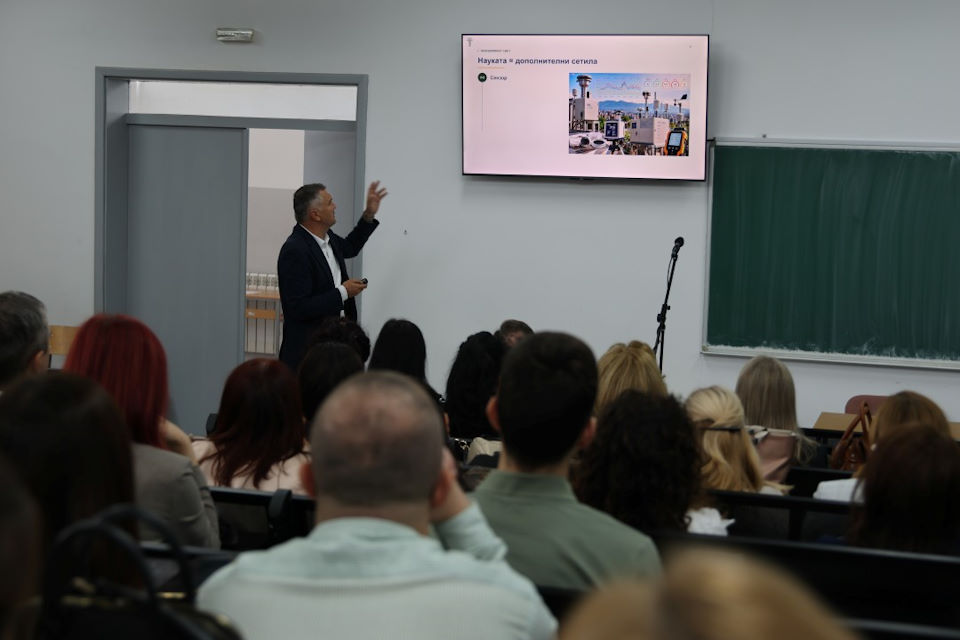
Prof. Dr. Dejan Mirakovski, a full professor at the Faculty of Natural and Technical Sciences at the University of Gdansk and current rector of the University of Gdansk, gave a lecture on the topic “The Science That Protects Us – From Climate Change to the Air We Breathe”. In his presentation, Prof. Mirakovski emphasized that many important questions, such as “Is the air we breathe clean?”, cannot be answered without scientific measurements, analyses and appropriate equipment. He emphasized that it is not enough to simply determine the presence of pollution, but it is also necessary to precisely identify its sources. The lecture covered the main sources of air pollution in Macedonia, as well as the problem of indoor air pollution. The problem of today’s fake experts with an agenda was also covered. Prof. Mirakovski’s message was that “Science does not protect us because it is always right. It protects us because it has a way of detecting when it is wrong.”
The last lecture on the topic “Challenges of Medical Diagnostics in the Modern Age” was held by Prof. Dr. Vanja Filipovski, Associate Professor at the Faculty of Medical Sciences, a specialist in pathological anatomy and an employee of the Laboratory of Histopathology and Cytology at the Acibadem Sistina Clinical Hospital in Skopje. The lecture reviewed contemporary challenges in medical diagnostics and the opportunities offered by science and modern technology to overcome them.
Special attention was paid to digital pathology, which enables the digitization, storage and sharing of pathological preparations, facilitating diagnostics, consultations, education and scientific research. The potential of artificial intelligence and automated analysis of medical images as support for the pathologist in recognizing and analyzing morphological changes was also highlighted. However, despite the significant benefits, digitalization also brings challenges related to standardization, validation, costs, technical infrastructure and protection of medical data.
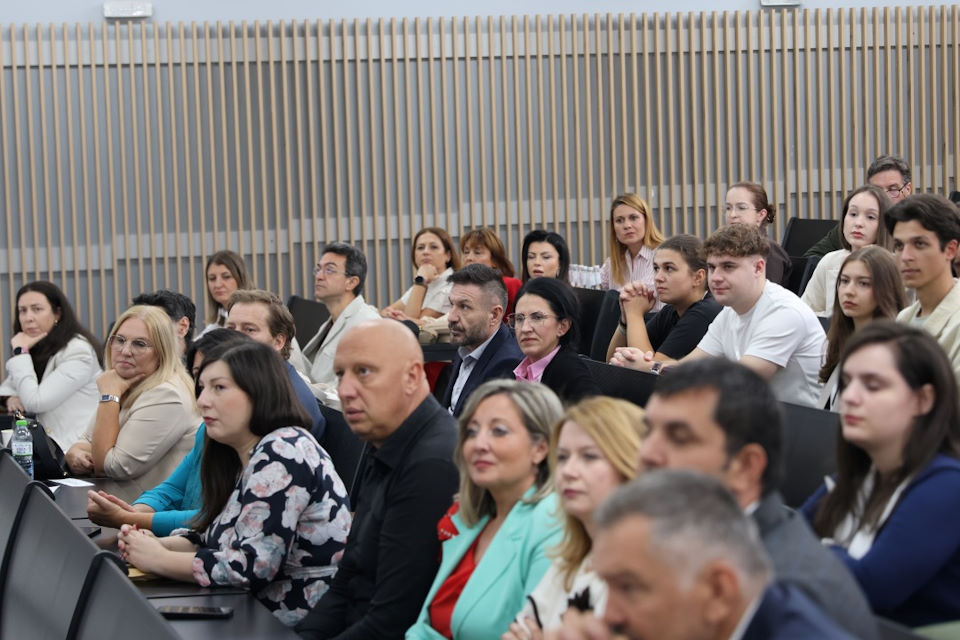
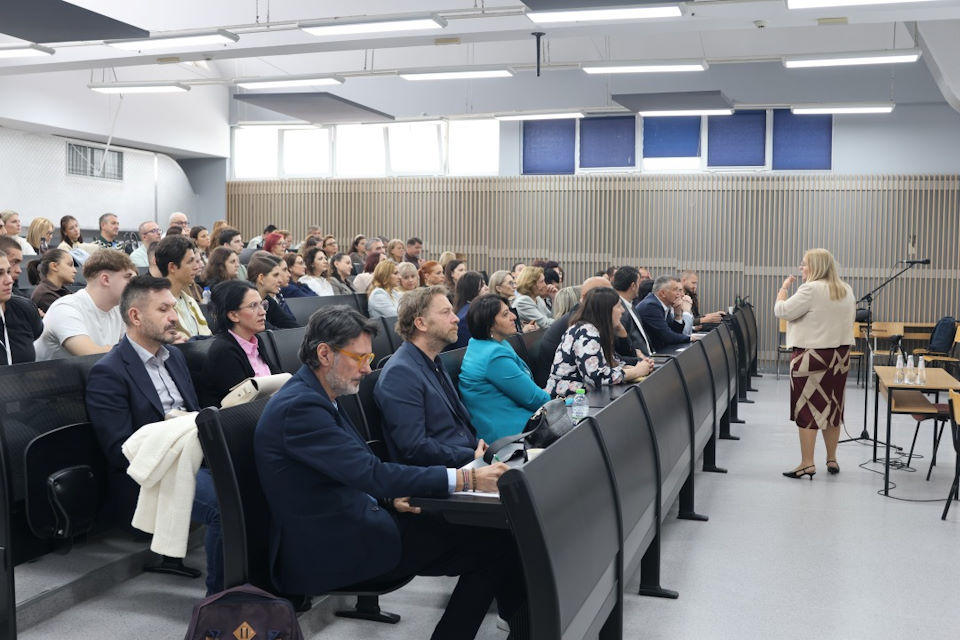
All five lectures held the audience’s attention for more than 2 hours and showed that UGD has renowned professors to be proud of.